INDUSTRY
Health Care
CLIENT
HealthLink B.C.
Primary Care Network and Service Directory

Designing a unified experience across digital and 811 care pathways
HealthLink BC is a critical public service that helps residents access healthcare information and services across the province. Whether online or through 811, it serves as a primary entry point for individuals seeking guidance on where to go and how to access care.
As demand for healthcare services grows, so does the need for clear, accessible, and reliable information. The BC Ministry of Health initiated work to improve how Primary Care Network (PCN) information and the HealthLink BC Services Directory are presented, ensuring people can more easily understand their options and take the next step in their care journey.
Number 41 partnered with the Province to redesign the experience, creating a more intuitive and aligned service across both digital and phone-based channels.

The challenge
The existing experience made it difficult for users to quickly find and understand relevant healthcare services.
Information within the HealthLink BC Directory and PCN content was structured around programs and internal organization rather than how people naturally search for care. This created challenges for both public users and 811 operators, who rely on the same information to guide callers.
As a result, users often struggled to navigate the system, while operators had to bridge gaps between how information was presented and how people described their needs.
The opportunity was not simply to improve navigation, but to rethink how the service is structured, ensuring alignment between digital and phone-based interactions and making it easier for people to find the right care at the right time.
Our design approach
Number 41 led the service and experience design effort, working closely with Ministry stakeholders, 811 operators, and clinical teams to understand how people access care in practice.
We conducted targeted user research to uncover how public users search for services and how 811 operators support callers. These insights were translated into journey maps, task flows, and service blueprints that revealed key friction points and misalignment across channels.
Building on this foundation, we designed low- and high-fidelity wireframes and interactive prototypes for both the PCN Online experience and the HealthLink BC Directory. Usability testing was conducted throughout to evaluate findability, comprehension, and task completion, ensuring the experience was clear and effective.
Designs were iterated based on behavioural insights, improving content structure, navigation clarity, and accessibility. Throughout the process, we worked closely with agile delivery teams to ensure feasibility and alignment with BC Government design standards.
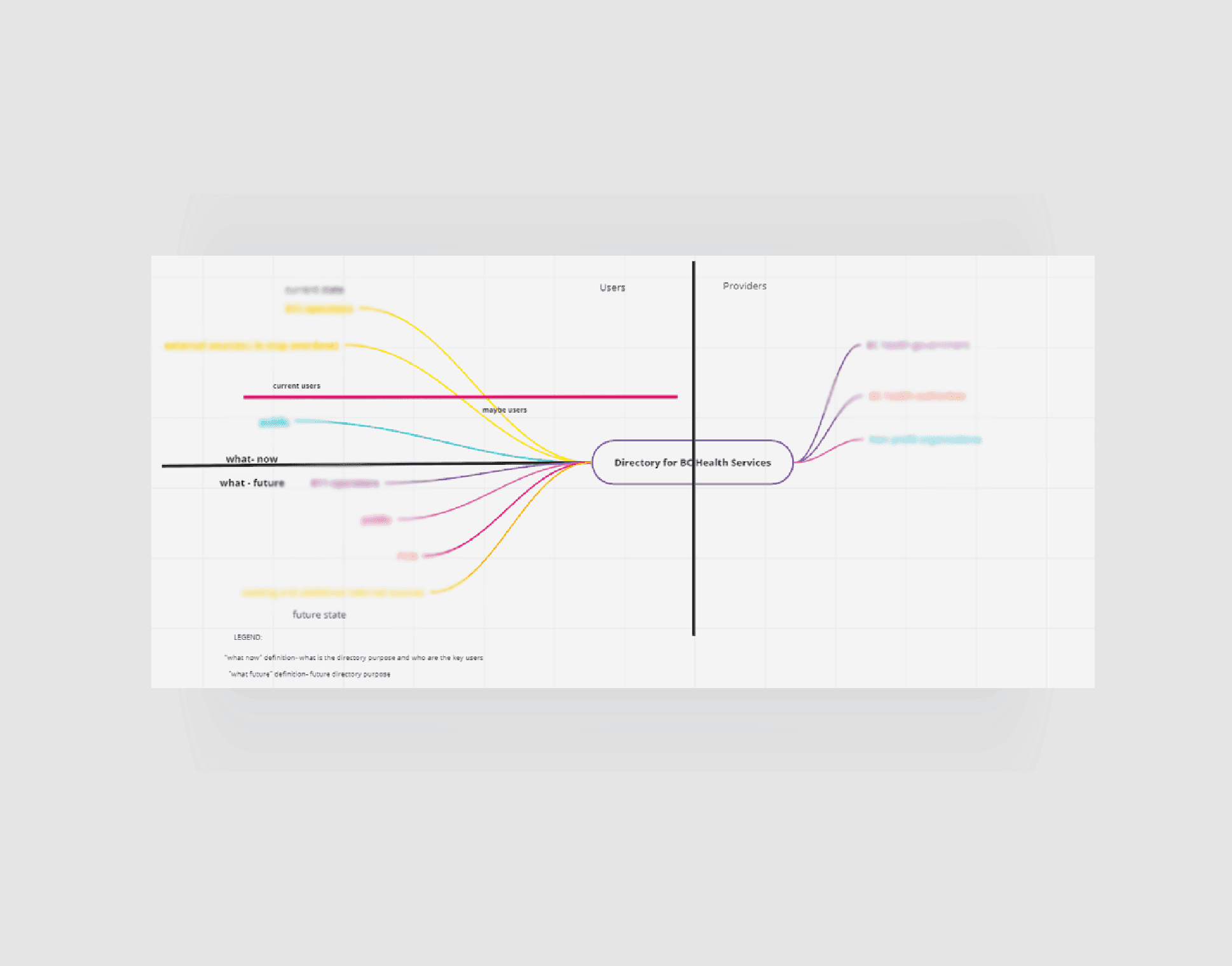
Mind map that showcases users flow from "Current state" and "Future state".
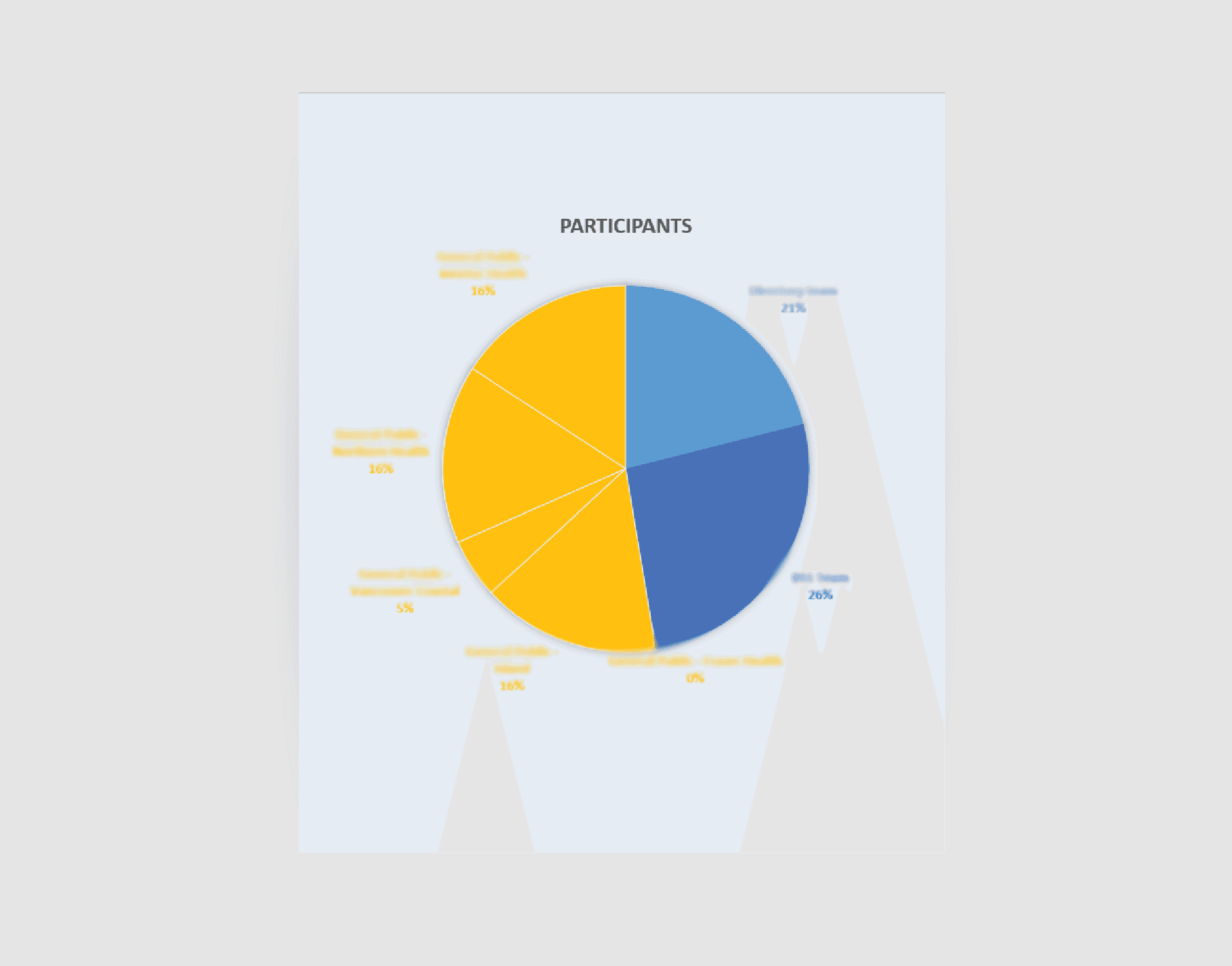
Remote usability testing was conducted with participants from various health authorities, business and 8-1-1 team.
The solution
The result is a redesigned digital experience that better reflects how people actually search for and access care.
The HealthLink BC Directory was restructured to improve findability and clarity, enabling users to quickly identify relevant services based on their needs. The PCN experience introduces primary care networks in a way that is easier to understand, helping users connect local services to their broader care journey.
The design aligns digital and phone-based pathways, supporting both self-service and assisted interactions. By organizing information around user intent rather than internal structures, the service provides a more consistent and intuitive experience across channels.
Behind the scenes, improved content structures and workflows support ongoing maintenance and evolution of the service.
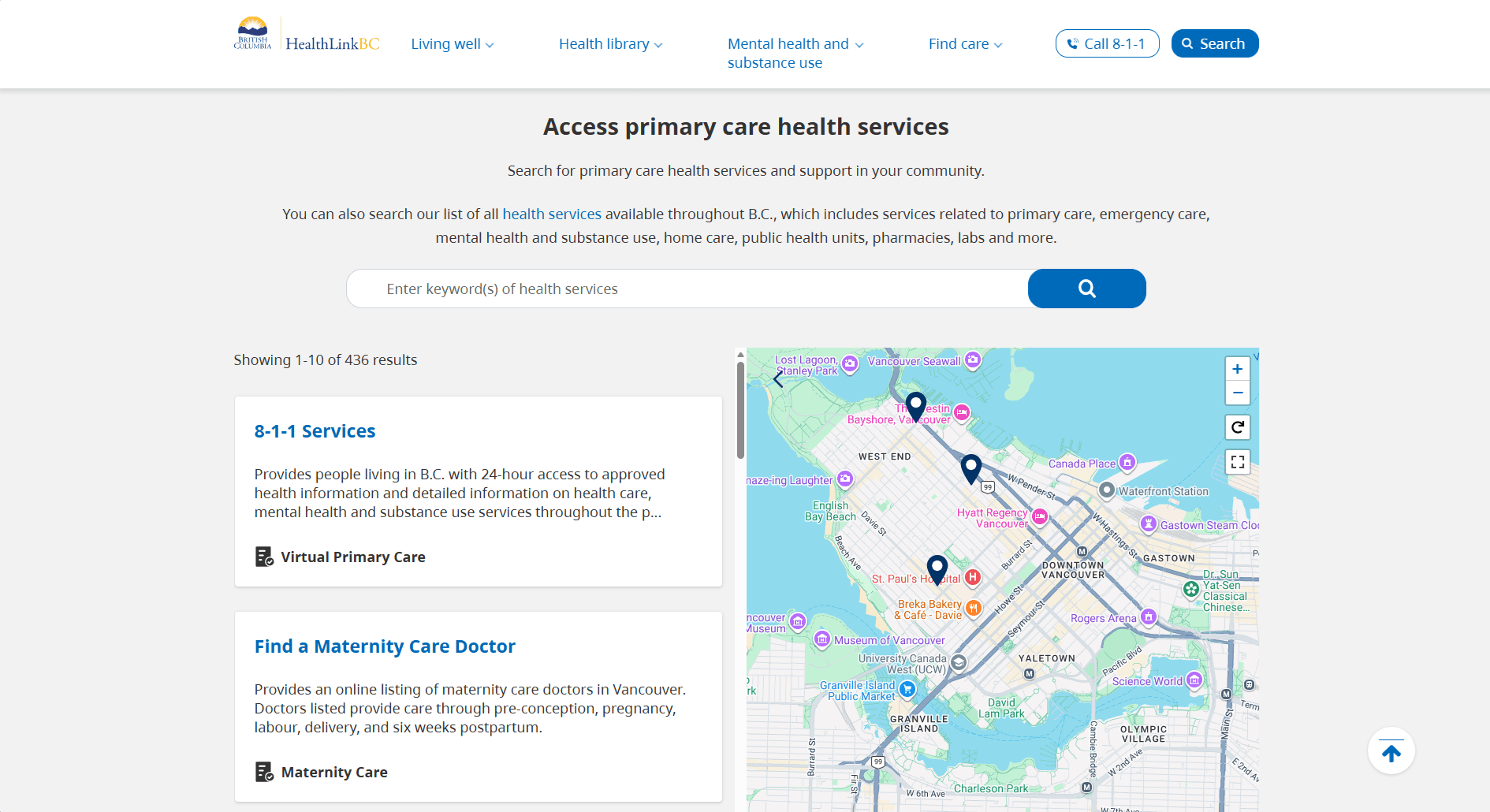
The HealthLink BC Directory search feature (https://www.healthlinkbc.ca/primary-care/community/vancouver-primary-care-network)
Outcomes
The redesigned HealthLink BC and PCN experience provides a clearer, more accessible pathway for residents seeking care.
Users are better able to find and understand available services, reducing confusion and supporting more informed decisions. At the same time, 811 operators are better equipped to guide callers using information that aligns with how people describe their needs.
The service now reflects a more connected approach, bridging digital and phone-based channels and improving consistency across the system.
What was once a fragmented and difficult-to-navigate experience has been transformed into a cohesive, user-centered service, demonstrating how thoughtful design can improve access to essential healthcare services at a provincial scale.
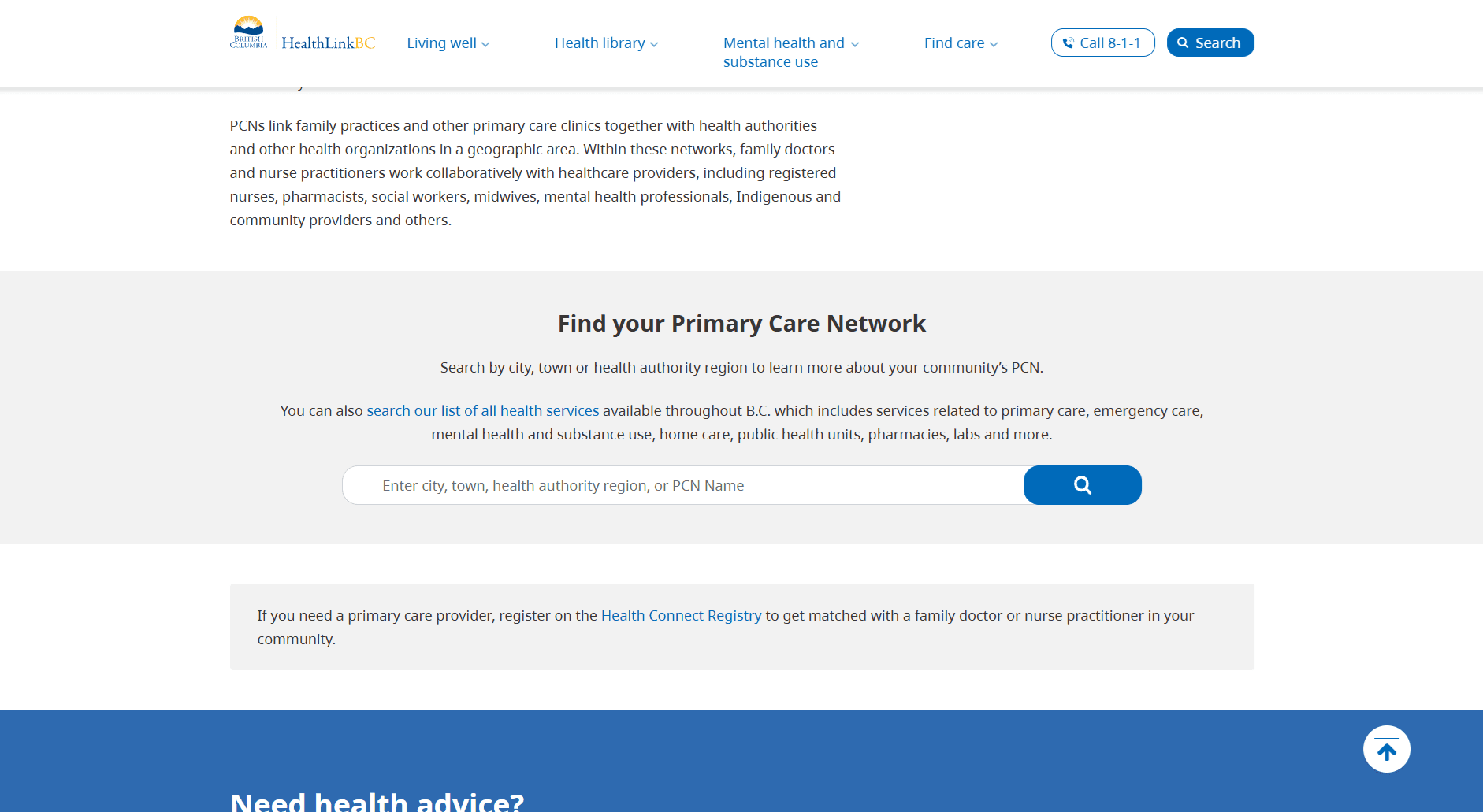
Find your Primary Care Network live experience (https://www.healthlinkbc.ca/find-care/primary-care/primary-care-your-community).