INDUSTRY
Public Safety
CLIENT
B.C. Government Security Programs Division (SPD)
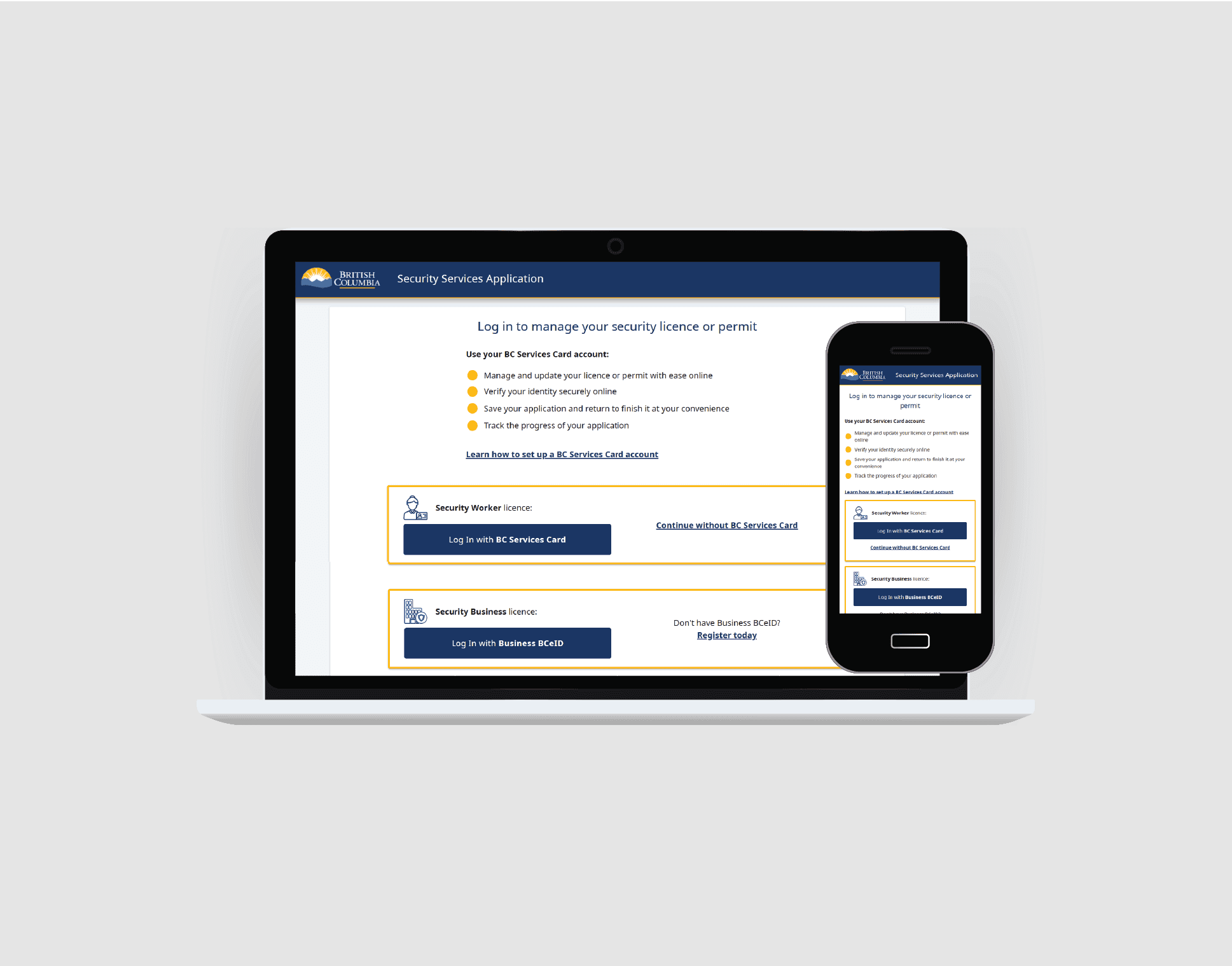
Security Services Application

Photo sourced from www.jibc.ca.
Designing a unified service model for screening and licensing
The Securities Program Division (SPD) within the Ministry of Public Safety and Solicitor General plays a critical role in delivering criminal record checks, security screenings, and licensing services across British Columbia. These services support a wide range of sectors and are essential to public safety and regulatory oversight.
Over time, the division’s processes had become increasingly complex, relying on paper forms, PDFs, and fragmented workflows that made it difficult for applicants to navigate and challenging for staff to manage at scale.
Number 41 partnered with the Province to support a comprehensive business transformation, reimagining how these services are delivered, from initial application through to case management and decision-making.

The challenge
The core challenge was not simply digitization, but systemic complexity.
Applicants were required to navigate unclear processes, submit information through disconnected channels, and manage status updates with limited visibility. Internally, staff relied on manual workflows and siloed systems, leading to inefficiencies, duplication of effort, and difficulty coordinating across teams.
At the same time, the division needed to balance modernization with operational continuity, ensuring that any changes aligned with regulatory requirements, existing systems, and the realities of day-to-day service delivery.
The opportunity was to rethink the service end-to-end: simplifying the experience for users while enabling a more efficient and coordinated internal operation.
Our design approach
Number 41 led the service design effort, working closely with stakeholders across SPD to understand how services were delivered in practice and where improvements were needed.
We began with structured scoping sessions and stakeholder workshops to define the scope and align on objectives. Through interviews and collaborative sessions with program staff, we developed detailed current-state service blueprints, mapping how processes functioned across the division and identifying key pain points and inefficiencies.
Building on this foundation, we led the development of future-state service blueprints, defining a clear, user-centred vision for how services should operate. Gap analysis exercises helped identify where changes were required, while ensuring alignment with business goals and operational constraints.
These blueprints became the foundation for design. We translated them into end-to-end digital journeys, supported by prototyping and usability testing to validate the experience. Throughout, we worked closely with the development team and architects to ensure that design decisions were feasible, scalable, and aligned with implementation.
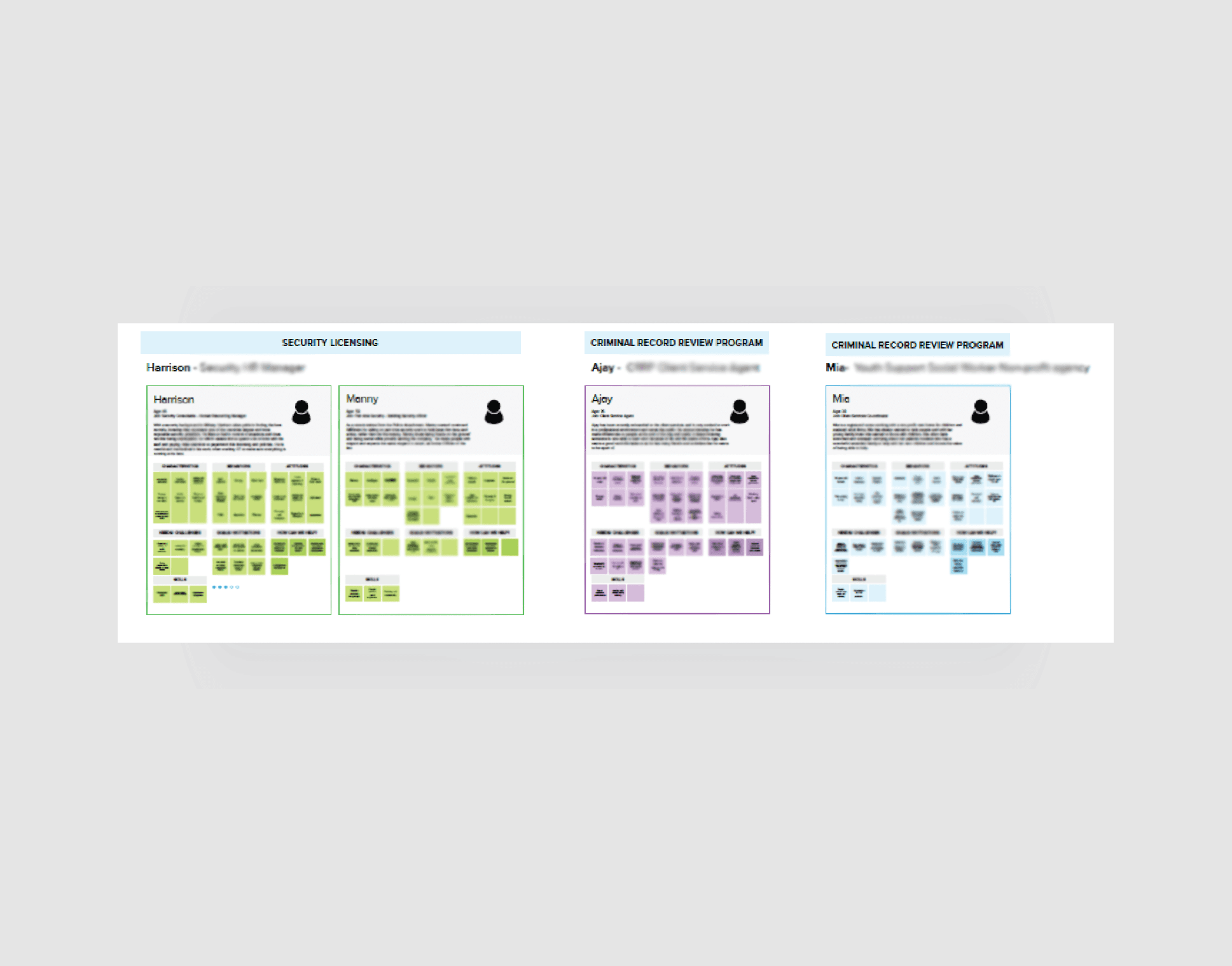
Personas representing stakeholders that would be interacting with the end-product.
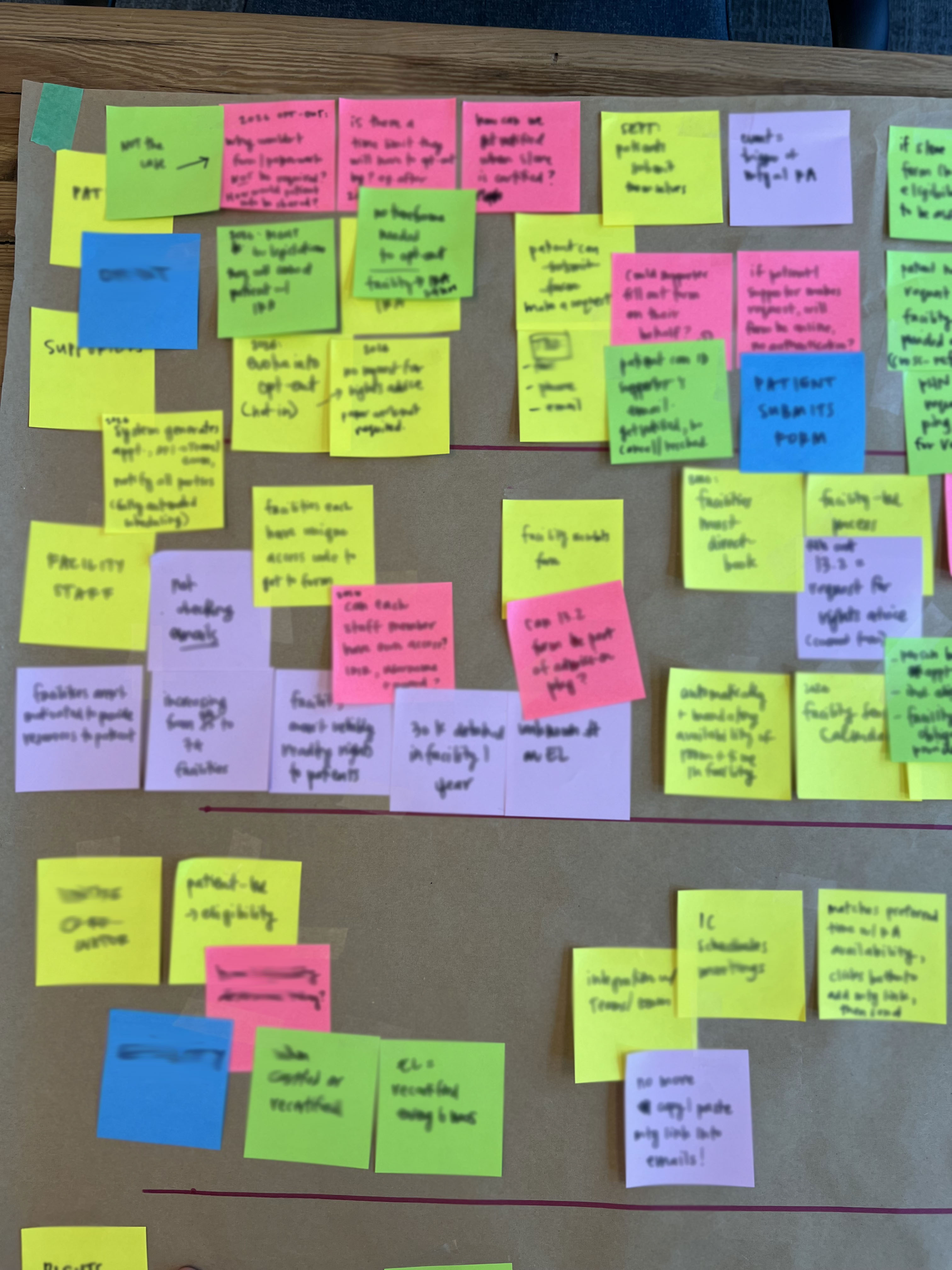
In-person workshop held to understand the current workflow.
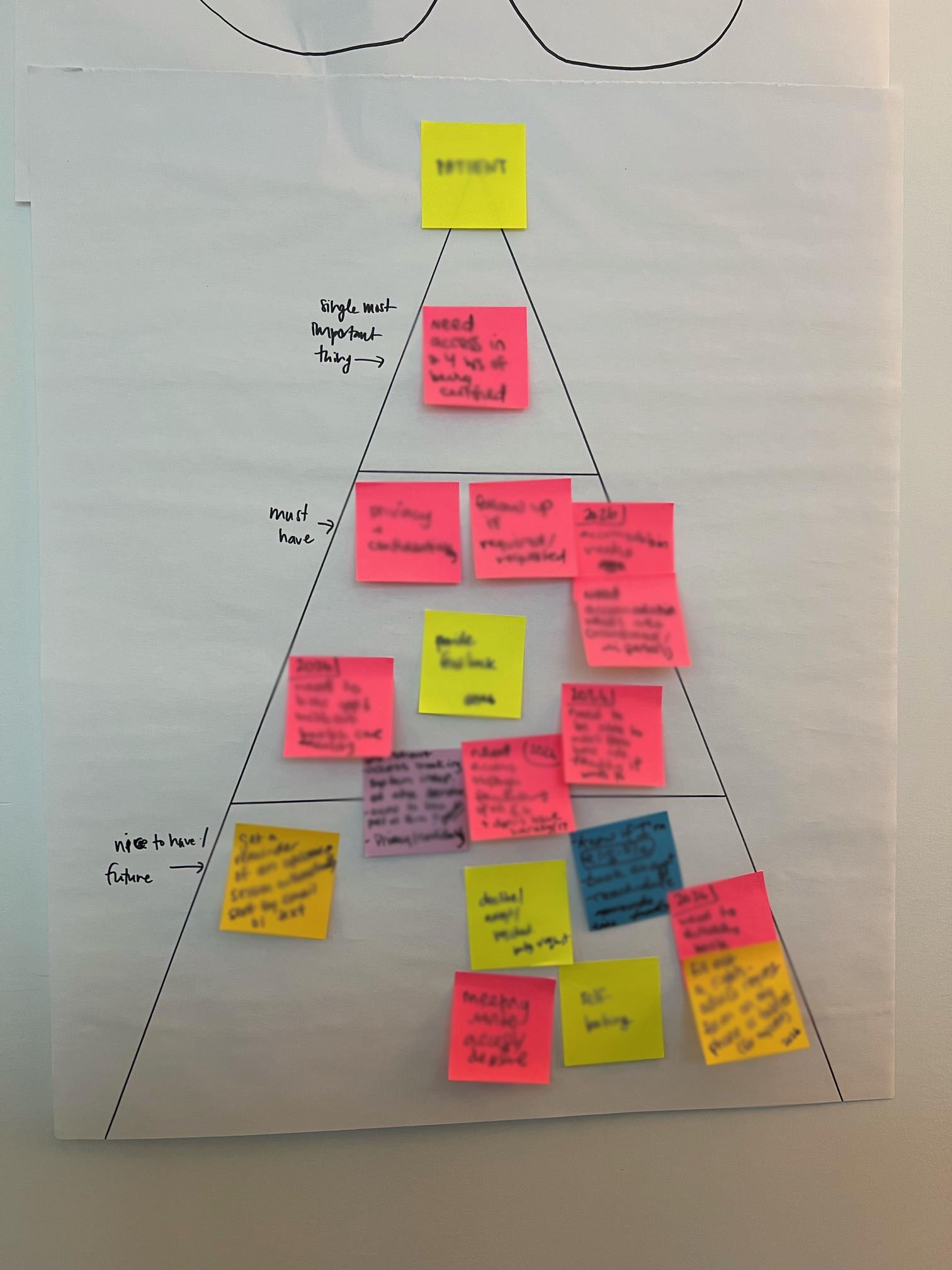
In-person workshop conducted to determine functional priorities, incorporating the needs and wants of the business and its stakeholders.
The solution
The result is a cohesive, digitally enabled service model that replaces fragmented, paper-based processes with streamlined an end-to-end digital experience.
Applicants can now complete applications through clear, guided workflows, while authenticated portals allow licence holders and managers to track status, manage submissions, access reports, and complete required actions in one place.
Behind the scenes, redesigned workflows and integrated case management processes provide staff with improved visibility and coordination, enabling more efficient handling of applications and screenings.
The solution aligns user experience with operational delivery, ensuring that the system not only simplifies interactions for applicants, but also supports staff in delivering services more effectively.
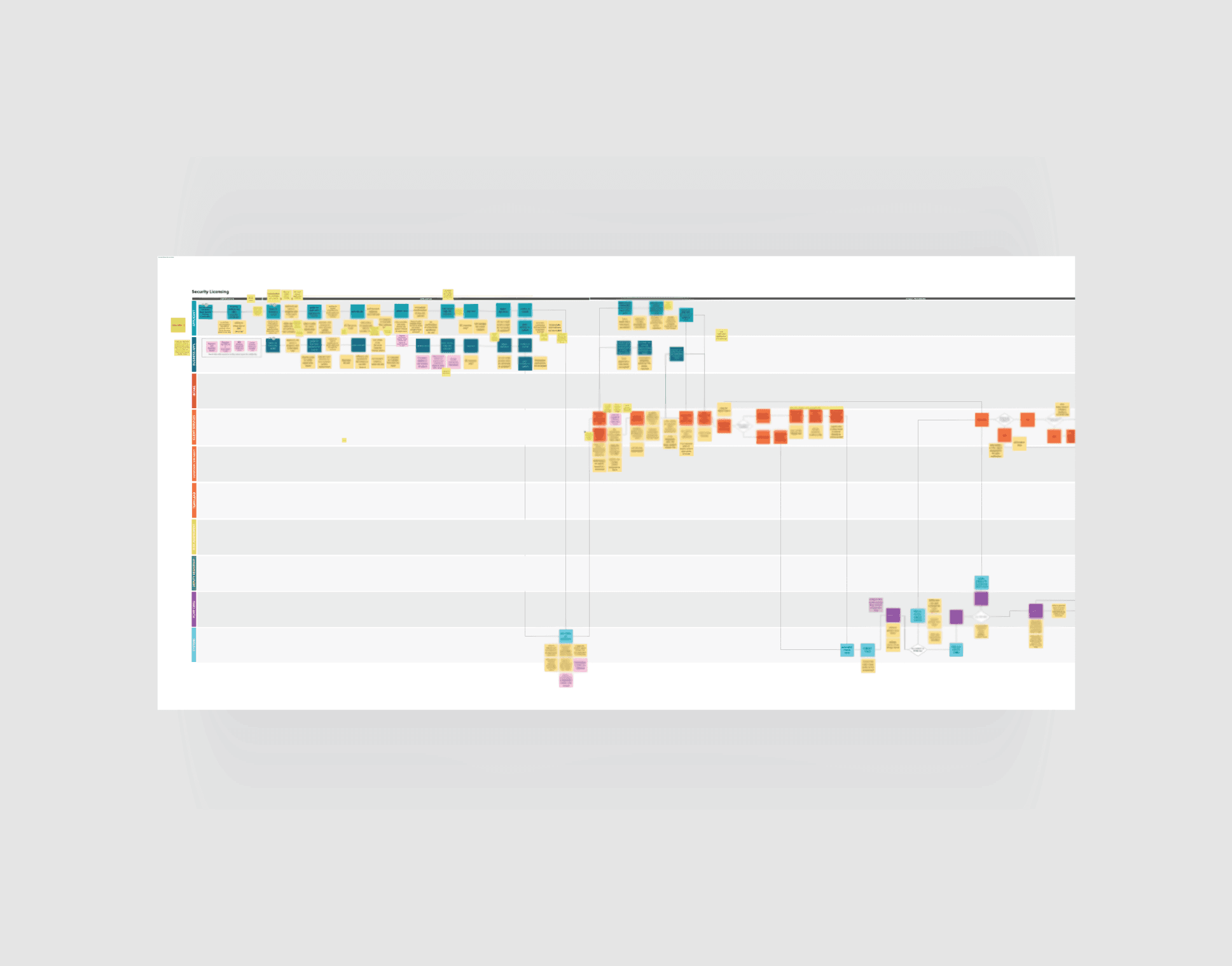
Future-state blueprint workshop with the business to ensure continuity across the end-to-end flow.
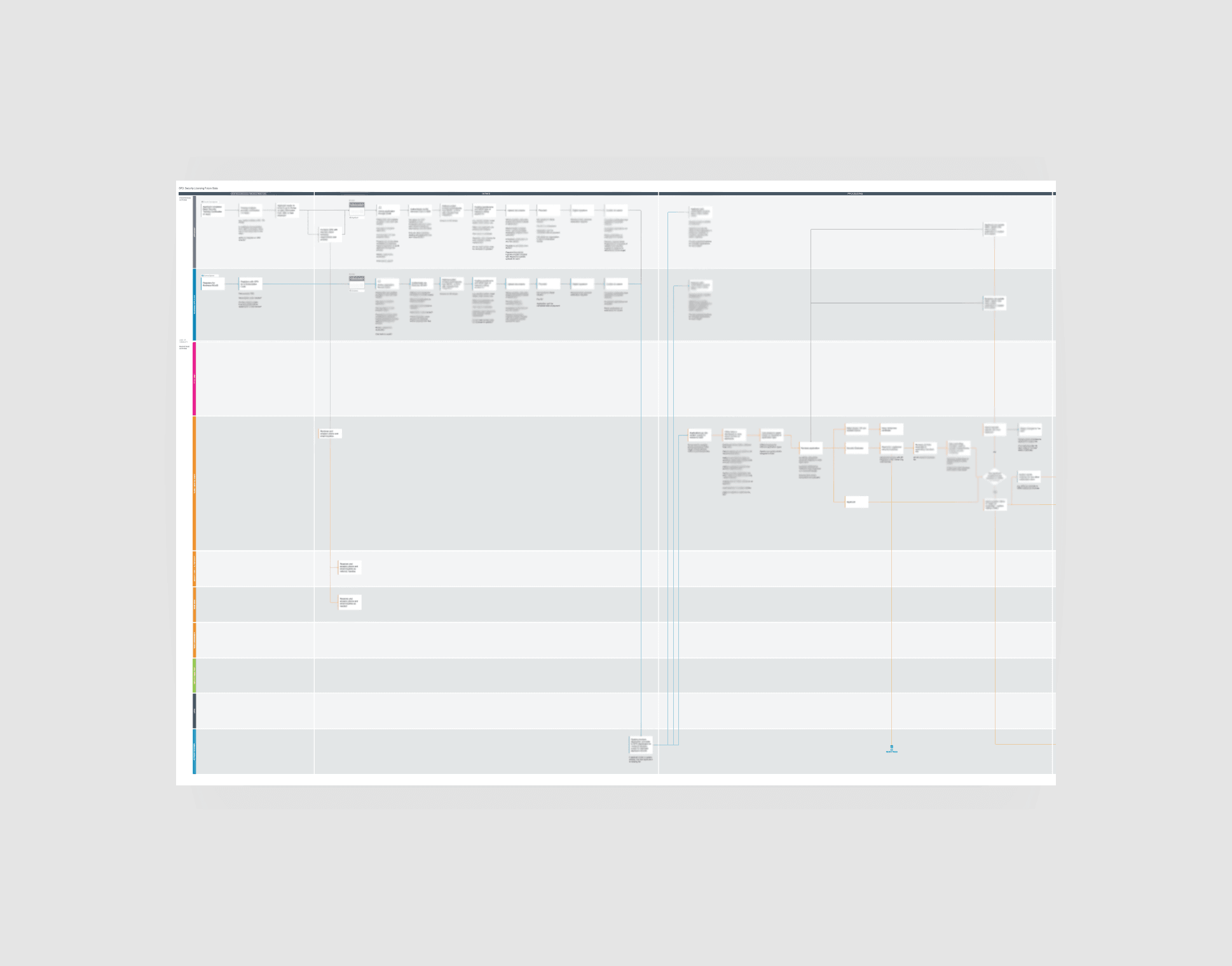
Final future-state blueprint workshop which the digital prototype will be based on.
Outcomes
The transformation of SPD has established a more modern and cohesive approach to delivering regulatory services across the division.
The experience for applicants is clearer, more consistent, and easier to navigate, reducing friction and improving overall usability. Internally, staff benefit from streamlined workflows, improved coordination, and greater visibility into the status of applications and cases.
Beyond immediate improvements, the work has created a strong foundation for ongoing modernization, aligning processes, systems, and roles around a shared service model.
What was once a fragmented set of processes has been reshaped into a connected service ecosystem, demonstrating how thoughtful service design can drive meaningful organizational change across both citizen-facing and internal operations.