INDUSTRY
Justice
CLIENT
Alberta Ministry of Justice
Justice Transformation Initiative

Digitizing with integrity: reinventing Alberta’s traffic trial process
Across Alberta, thousands of traffic trials required in-person attendance each year, placing strain on courtrooms, justice participants, and citizens alike. For many, attending a trial meant taking time off work, travelling long distances, and navigating a process that was not designed for flexibility.
As part of a broader Justice Transformation Initiative, the Government of Alberta set out to rethink how these services could be delivered. The goal was not simply to move trials online, but to redesign the experience in a way that improved access, reduced pressure on the system, and preserved the integrity of the judicial process.
Number 41 partnered with the Province to help design a modern, digital-first approach to traffic trials. One that reflects how people expect to interact with public services today.
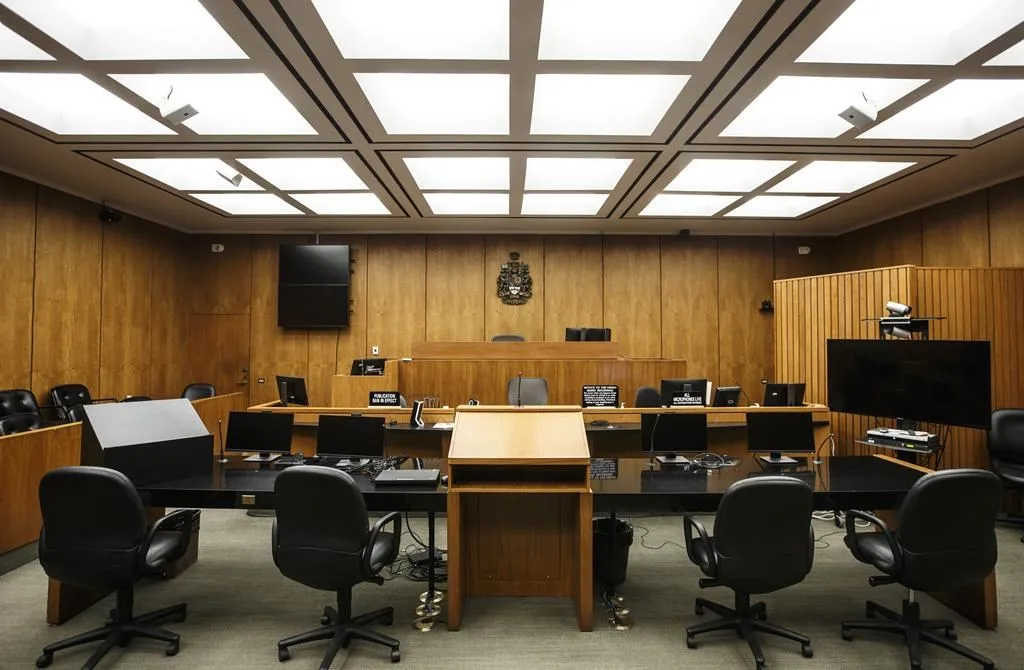
A courtroom at the Edmonton Law Courts building, in Edmonton on Friday, June 28, 2019. THE CANADIAN PRESS/Jason Franson (Sourced from Global News).
The challenge
Traffic courts operate within a highly structured and regulated environment, where fairness, transparency, and procedural integrity are essential. Any change to how trials are conducted must uphold these standards while addressing long-standing inefficiencies.
The existing model created challenges across the system. Courtrooms were burdened with high volumes of in-person appearances. Police officers and prosecutors were required to travel and wait for scheduled hearings, often resulting in lost time and resources. Drivers faced similar challenges, particularly those in rural or remote areas.
Designing a digital alternative required balancing two competing realities: improving accessibility and efficiency, while ensuring the experience remained credible, secure, and aligned with judicial expectations. This was not a simple digitization effort, it required rethinking the service end-to-end.
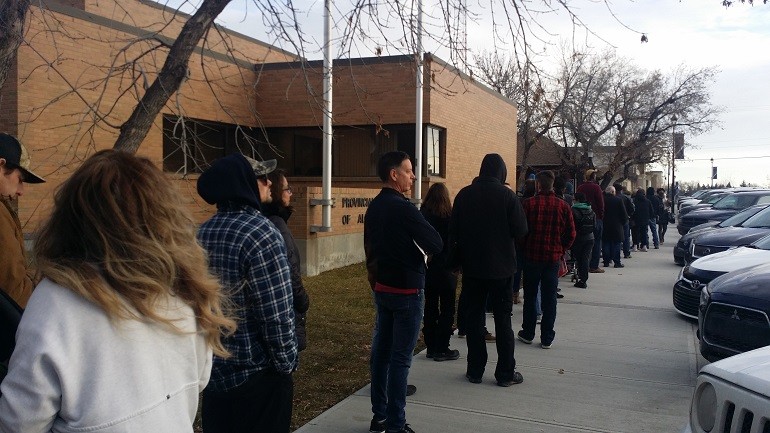
Long lines for Strathmore Provincial Courthouse (Sources from StrathmoreNow).
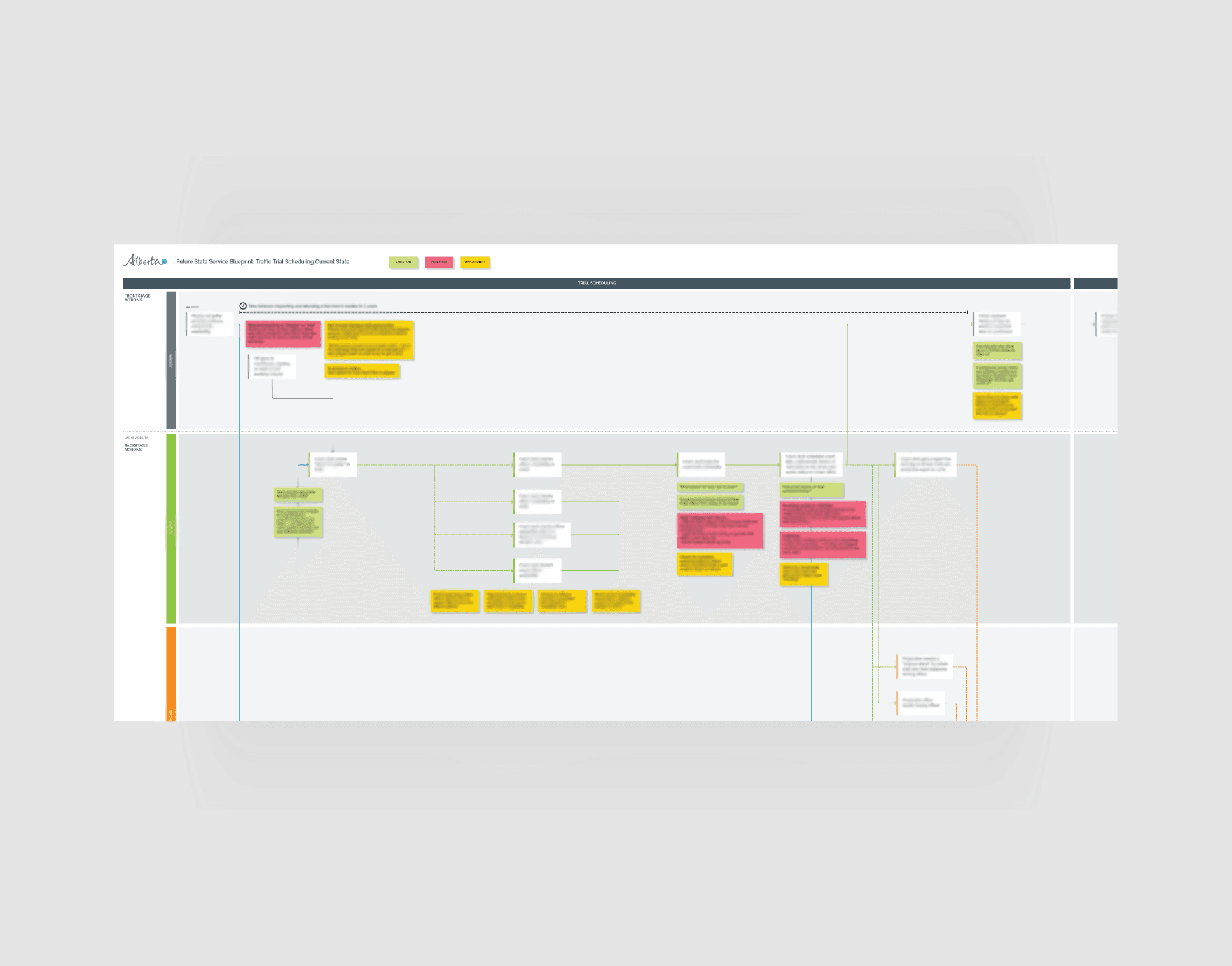
Trial scheduling current state blueprint.
Our approach
Number 41 led the service and experience design effort, working closely with justice stakeholders to understand how traffic trials function in practice.
We conducted in-depth research with drivers, prosecutors, police officers, court clerks, and Justices of the Peace, including interviews and job shadowing to capture the nuances of each role. These insights were translated into end-to-end journey maps and service blueprints, revealing how information moved through the system and where inefficiencies occurred.
Building on this foundation, we designed tailored digital experiences for each participant group, ensuring that the needs of drivers, court staff, and justice officials were all addressed within a cohesive system. Rapid prototyping and usability testing were used to validate workflows such as evidence submission, case management, and virtual trial participation, ensuring the experience remained clear and fair across devices and environments.
This approach ensured that the solution was grounded in real operational conditions and aligned with the standards of the justice system.
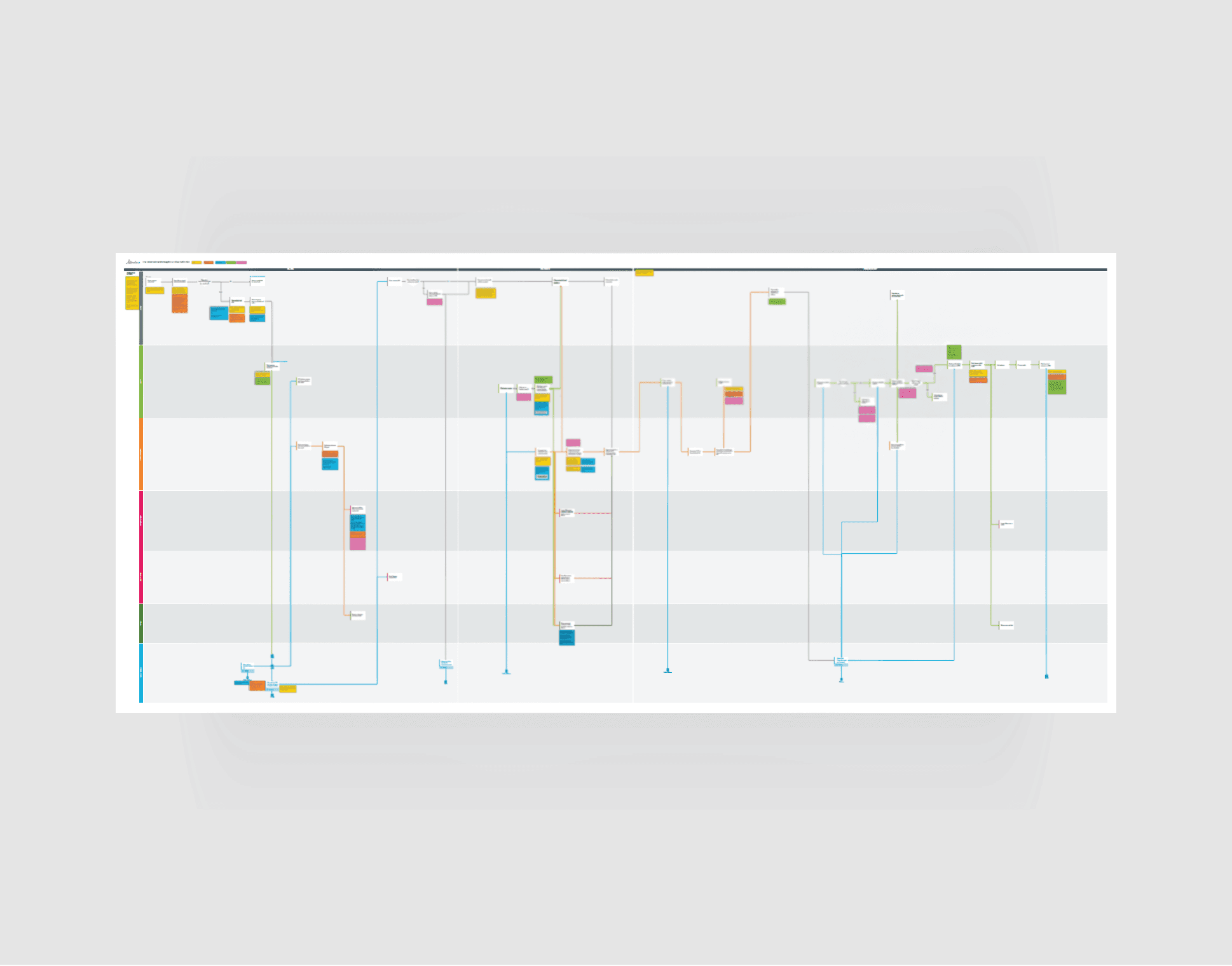
Future state blueprint initial version.
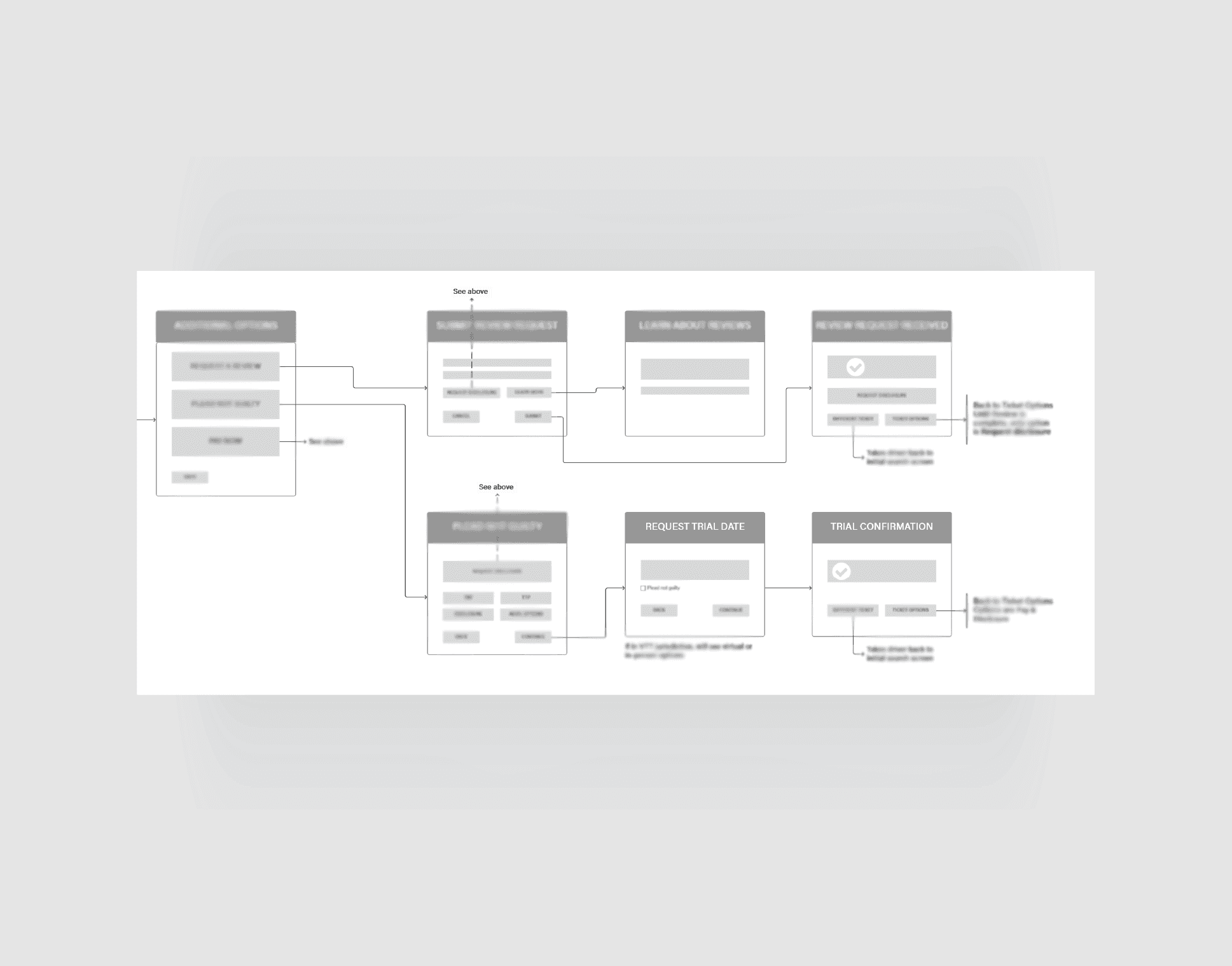
High level look into an accused's workflow to scheduling a trial.
The solution
The Virtual Traffic Trials platform enables eligible traffic matters to be conducted online through a secure, structured digital experience.
Drivers are guided through a clear process to request a trial, submit evidence, and participate remotely. Prosecutors and court staff are supported with tools to manage cases, review materials, and coordinate proceedings. Police officers are able to attend virtually, reducing travel time and improving scheduling efficiency.
The platform was designed to reflect the formality and structure of traditional court processes, while removing unnecessary friction. By aligning the digital experience with established procedures, the system supports both usability and trust, ensuring participants can engage with confidence.

Proposed high-fidelity wireframes of the access point for accused driver's to attend the virtual traffic trials.
Outcomes
The Virtual Traffic Trials platform has introduced a more flexible and efficient approach to handling traffic matters across Alberta.
The service reduces reliance on physical courtrooms, easing pressure on facilities and staff while enabling more effective scheduling and participation. Justice participants are able to engage remotely, improving attendance and reducing time spent travelling or waiting.
For citizens, the experience is more accessible and easier to navigate, particularly for those in rural or remote communities. At the same time, the integrity and transparency of the judicial process have been maintained.
What emerged is not simply a digital alternative, but a modernized service. One that demonstrates how public sector systems can evolve to meet changing expectations while preserving the principles they are built on.
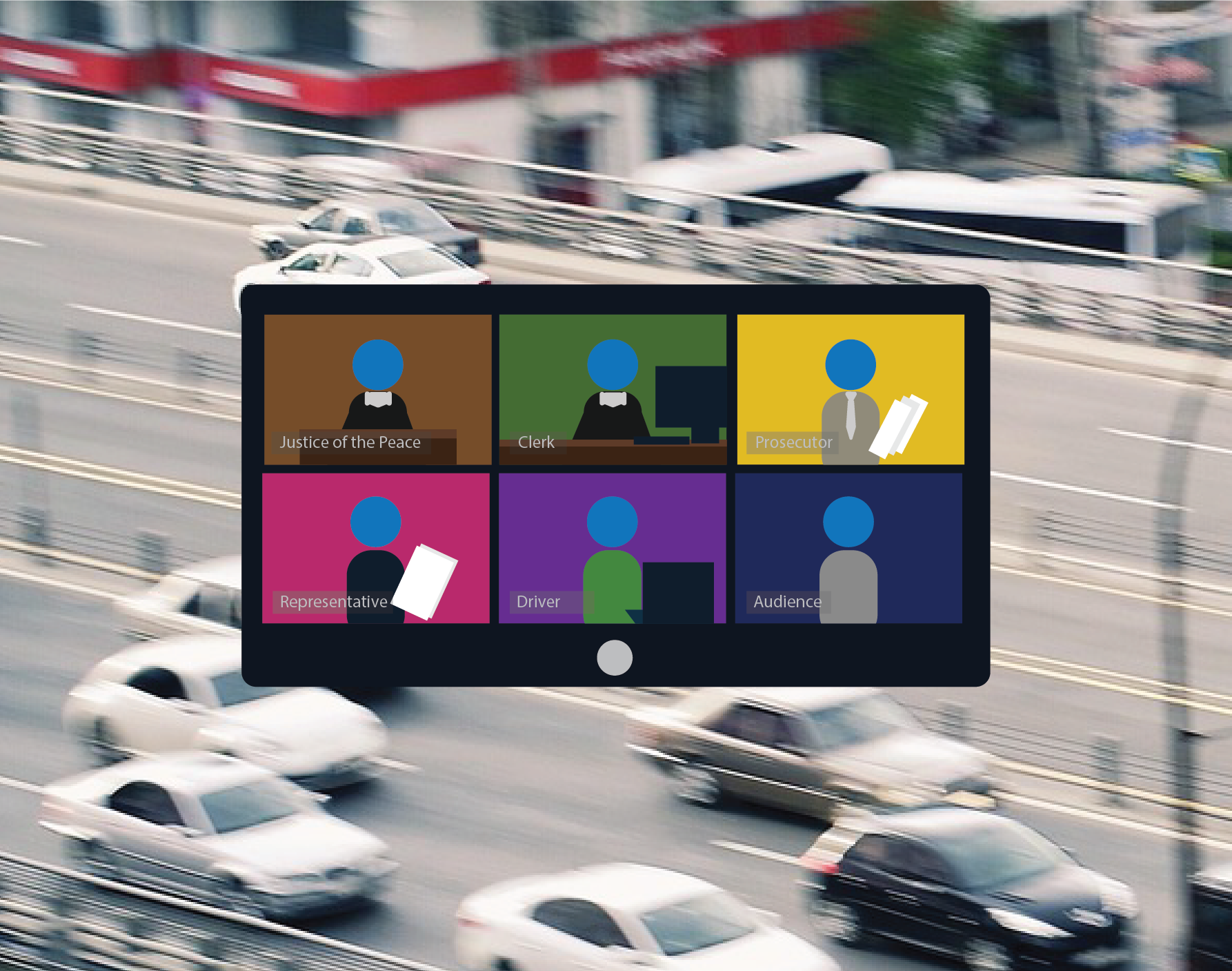
Illustration of the real traffic court trials conducted virtually.