INDUSTRY
Health Care
CLIENT
The Canadian Mental Health Association BC Division (CMHA BC)
BounceBack Transformation
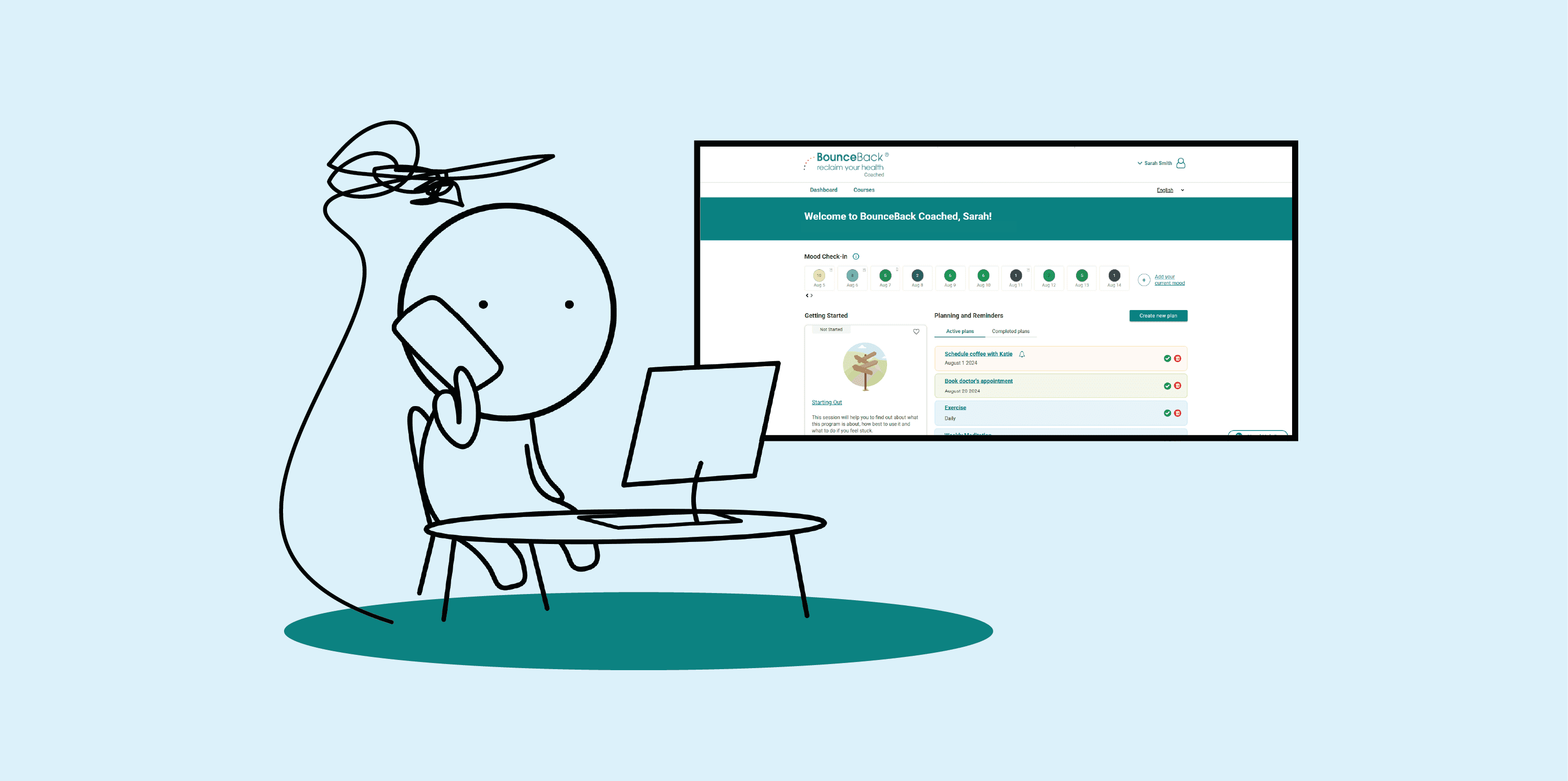
Modernizing BounceBack: reclaiming ownership and scaling mental health support
BounceBack is a widely used mental health program that supports youth and adults in managing depression, anxiety, and stress through guided coaching and self-directed learning.
As demand for services grew, CMHA BC recognized the need to evolve the platform to better support participants, coaches, and administrators, while enabling long-term scalability and flexibility.
Number 41 partnered with CMHA BC to redesign and deliver a modern digital platform, creating a more accessible, user-centred experience and a sustainable foundation for future growth.

The challenge
The existing BounceBack platform was proprietary and inflexible, limiting CMHA BC’s ability to scale services, manage content, and retain ownership of program data.
Participants faced an experience that did not fully reflect how they engaged with the program, while coaches and administrators worked within systems that constrained workflows and limited visibility. At the same time, the organization needed a solution that could support evolving program needs without increasing technical complexity or dependency.
The challenge was to move beyond incremental improvements and design a platform that aligned with real user workflows, supported operational needs, and provided long-term control and flexibility.
Our design-led approach
Number 41 led the engagement using a design-led delivery approach, defining both the user experience and system architecture before development began.
We started by mapping the full service ecosystem, understanding how participants, coaches, and administrators interacted with the program across digital and operational touchpoints. These insights were translated into service blueprints, journey maps, and workflow models that defined a clear future-state vision.
In parallel, we rapidly developed high-fidelity, interactive prototypes to simulate key experiences such as registration, onboarding, coaching, and content access. These prototypes were tested with users and stakeholders, allowing us to validate workflows and refine the experience before any software was built.
At the same time, our design and technical teams worked together to define the underlying system architecture and data models, ensuring that the platform structure aligned with validated user needs. This approach reduced delivery risk and ensured a strong foundation for development.
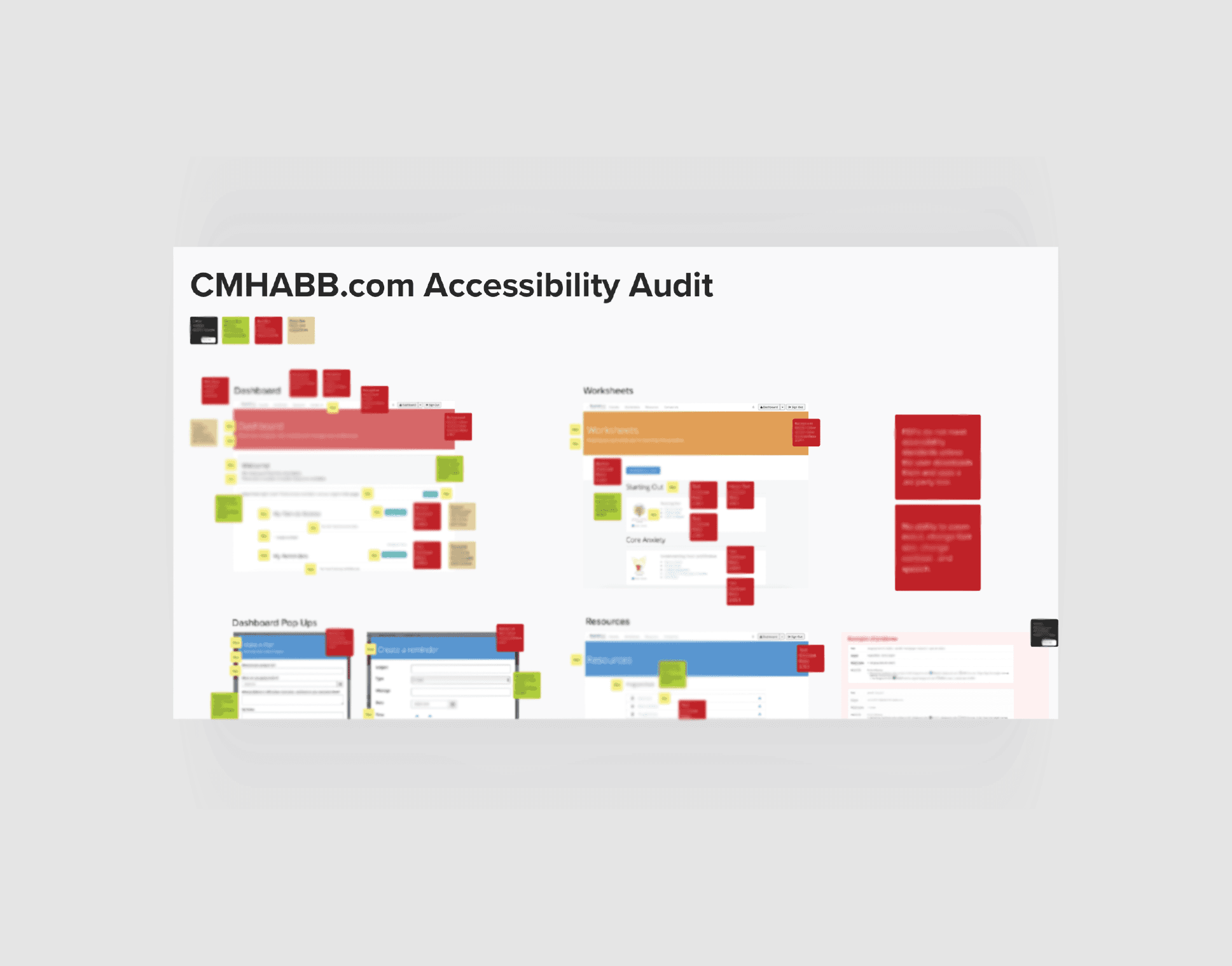
Accessibility audit conducted of the current website experience.
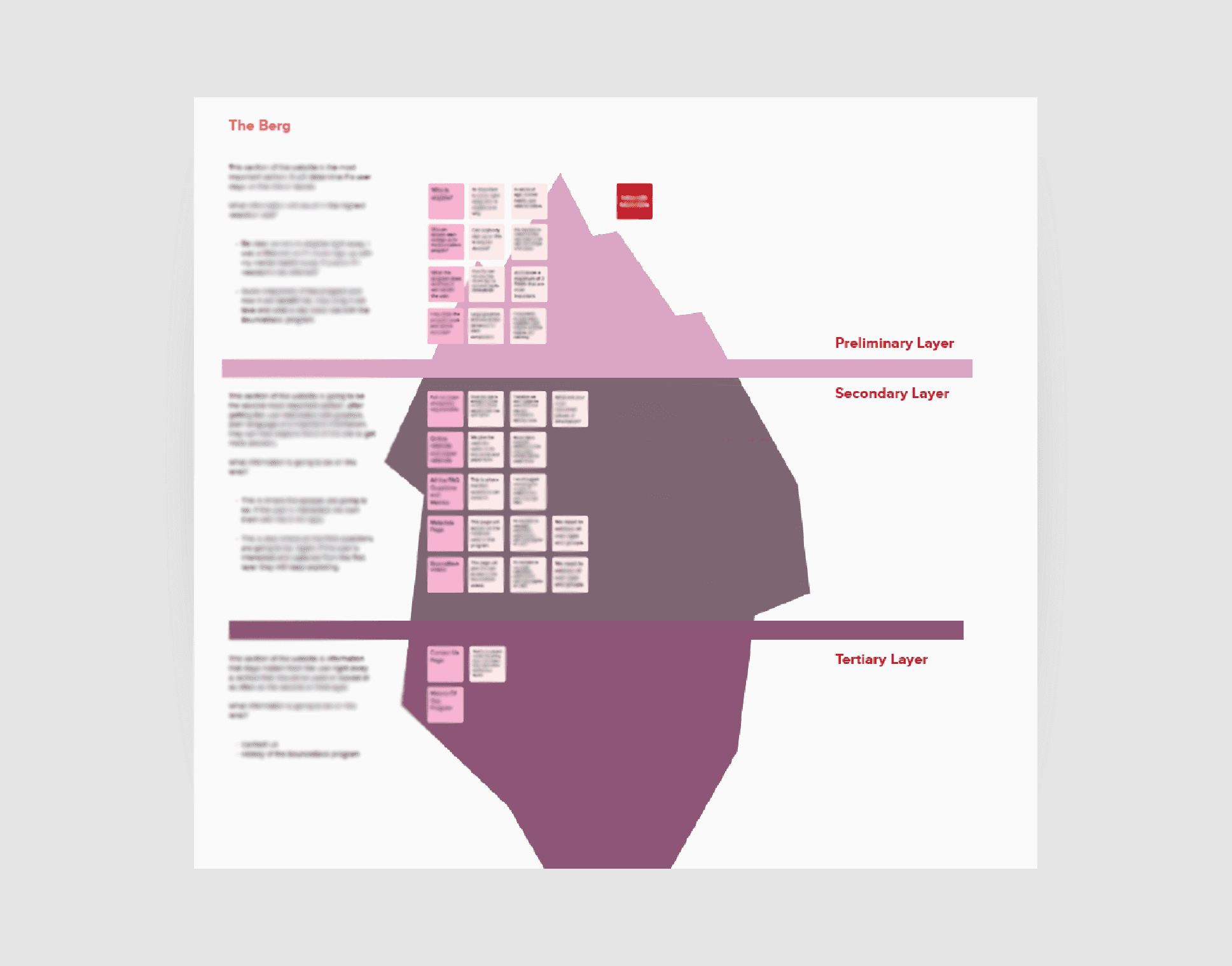
Iceberg diagram workshop conducted to map out the layers of the website experience.
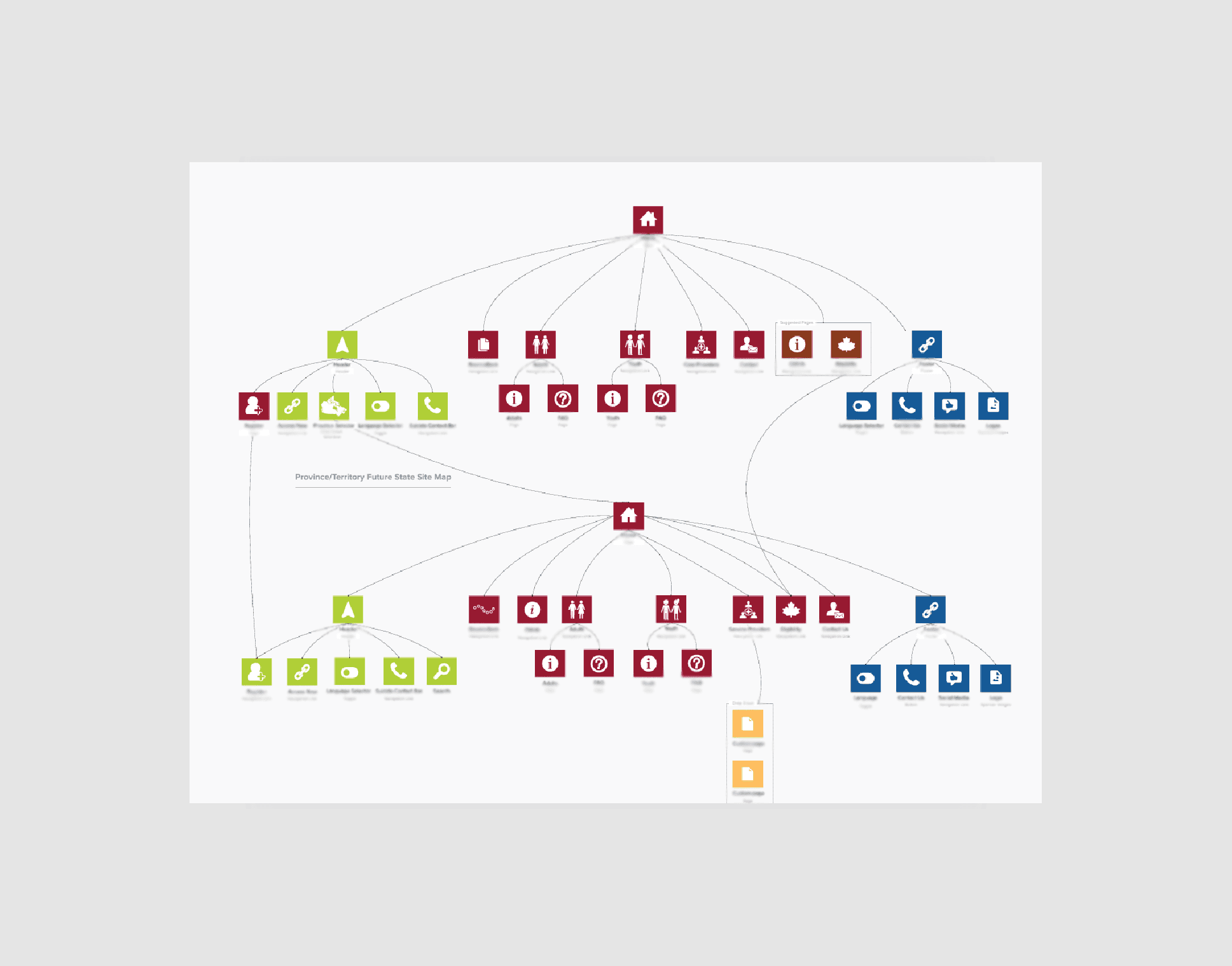
Provinces/Territories future state site map.
The solution
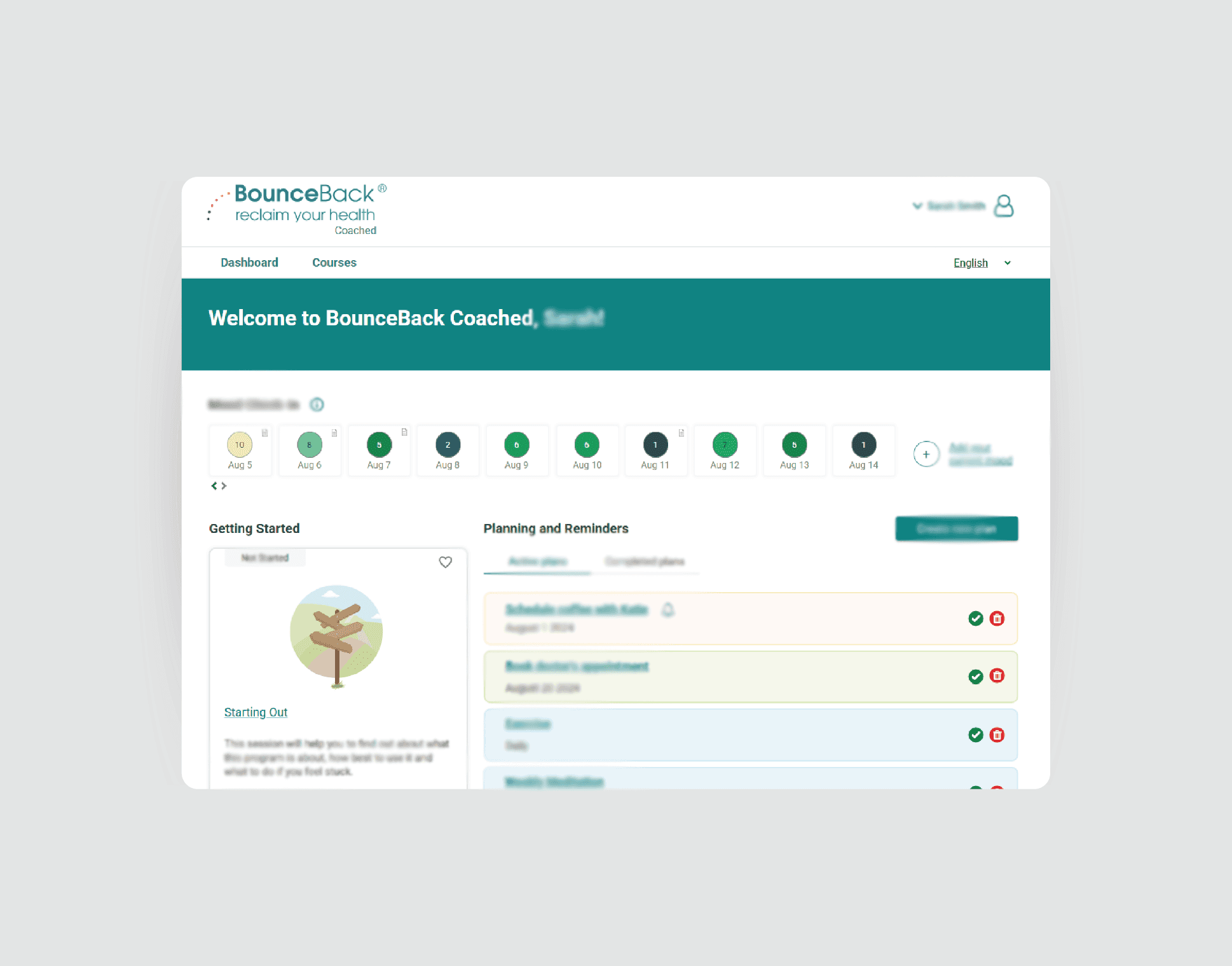
The result is a modern, fully integrated digital platform designed and built to support the full BounceBack service.
The platform provides secure, role-based access for participants, coaches, and administrators, enabling each group to engage with the program in a way that reflects their needs. A flexible content management system allows CMHA BC to manage and evolve program content independently, while responsive, accessible interfaces ensure a consistent experience across devices.
Built on a scalable architecture, the platform supports current program delivery while providing the flexibility to expand and adapt over time. By aligning the design and technical foundations from the outset, the solution delivers both usability and long-term sustainability.
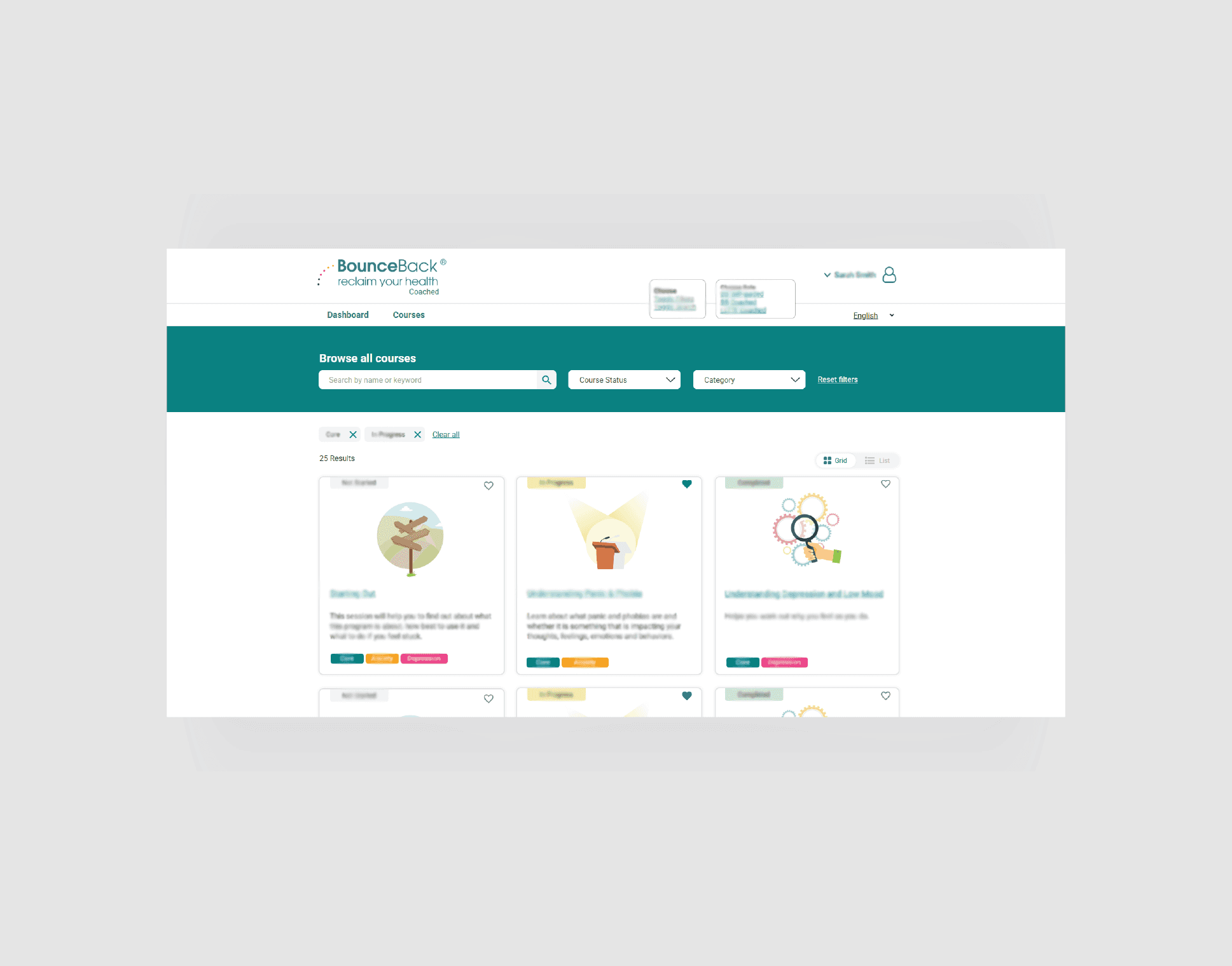
Proposed high-fidelity interactive wireframes.
Outcomes
The new BounceBack platform establishes a scalable, user-centred foundation for delivering mental health services across British Columbia and beyond.
Participants benefit from a clearer, more accessible experience that supports engagement and self-directed learning. Coaches and administrators are better equipped to manage workflows and deliver services effectively, with improved visibility and control.
CMHA BC now has full ownership of its platform and data, enabling greater flexibility and independence as the program evolves.
What was once a constrained and inflexible system has been transformed into a modern, adaptable service, demonstrating how a design-led approach can ensure the right solution is built, before development begins.